Monday, April 22, 2013

The Garden Tour


On Sunday, April 21, 2013, hundreds of folks braved the weather and turned out to take part in the 2013 Private Gardens of Historic Orlando Featuring Lake Eola Heights Historic District Garden Tour:


Many visitors cited the recent Orlando Sentinel article by Joy Dickinson, and we are appreciative of her wonderful writeup and the attention and appreciation it drew to the event and Pine Green. It was a joy to participate and tell part of our story about the home and the work we've done so far. The tour also inspired us to get the landscape in great shape - so hopefully we won't have quite as much work to do on it in the summer!


Many thanks to everyone who attended, and those who helped make the event a success by devoting their time and talents. The tour featured plein air artists (several wonderful paintings of Pine Green were created as a result!):
Artist Terri Rickerson painting a scene in the back yard
Also featured were several antique cars generously offered for display at various homes for the day:

1936 Ford on display at Pine Green
In addition, Reid's sister Michele Pasternak installed some of her unique bottle sculptures:


Pine Green's landscape features over sixty species, a combination of Florida native, Florida-friendly, and other traditional and not-so-traditional plants to create a unique lodge in the woods oasis in downtown Orlando.  While it still features many of the original plantings specified by Burt Foster (the famous 20th century Central Florida landscape architect), Pine Green's landscape has been significantly updated with the design of landscape architect (and our friend) Frank Joseph Brooks, whose designs were actually featured in three of the homes on the tour this year.
New bench (foreground) that Reid pieced together from a dead pine tree (it was Joe's idea).
Below is Joe's contact information, as well as a listing of local suppliers we've used and some of the plants at Pine Green.

Landscape design by: Frank Joseph Brooks (407.341.0022, fjbla@cfl.rr.com)

Bottle Sculpture by: Bottlesmith Michele Pasternak (mpasternak.artist@gmail.com)

Exterior/interior design updates, color selection/restoration, and art by: Reid Pasternack (www.reidpasternack.com)

Some of the nearby plant suppliers we’ve used for this landscape update:

Alfonso’s Tree Farm (for Weeping Yaupon Holly Tree)
Apenberry’s (for various flowers, shrubs, and pine straw)
Blodgett Gardens (for Coontail, some succulents, and flowers/shrubs)
Bolling Forest Products (for pine straw in bulk delivery)
Florico Foliage (for Algerian Ivy)
Green Images, Florida Native Landscape Plants (for Saw Palmetto)
Home Depot (for various shrubs, flowers, and succulents)
Landscape Resources (for River Birch)
Lowe’s (for various shrubs and flowers)
Lukas Nursery (for various shrubs, flowers, grasses, and groundcovers)
Medallion Nurseries (for Giant Apostle Iris)
Palmer’s Garden & Goods (for various flowers, shrubs, pine straw, and groundcovers, including Kangaroo Paw and Sunshine Mimosa plants)
S & K Sod (for JaMur Zoysia)

Some of the over sixty species featured at Pine Green (be sure to Google images of these, as many bloom at different times of the year, and some are just getting established at Pine Green so are not yet mature. For more information on specific Florida-friendly plants, visit www.floridayards.org):

Algerian Ivy (Canary Ivy) Hedera canariensis :


Amaryllis Amaryllis spp. (not currently blooming) :


Azalea Rhododendron cvs. (Florida-friendly) :
Azalea in bloom this past February

Beautyberry Callicarpa Americana (Florida native) (grows small purple berry clusters in the fall) :


Blazing Star Liatris spp. (Florida friendly/ some Florida native) (definitely one to Google to see the bloom!) :


Bleeding Glory-Bower (Bleeding-heart Vine) Clerodendrum thomsoniae (not currently blooming) :


Blue Daze Evolvulus glomeratus ‘Blue Daze’ (Florida-friendly) :
      

Bromeliads Bromeliaceae (various genera, species) (Florida-friendly/ some Florida native):


Bulbine Bulbine sp. :


Caladium Caladium x hortulanum (Florida-friendly) :


Camellia Camellia japonica (Florida-friendly) :


Candle Bush (aka Popcorn Senna) Senna alata (only the seed pods were on display but this plant makes marvelous yellow fall flowers) :


Cape Honeysuckle Tecomaria capensis (not currently blooming; flowers shown are from nearby Tabebuia) :


Cast iron plant Aspidistra elatior (Florida-friendly) :


Cattley Guava Psidium cattleianum Sabine :


Christmas cactus Schlumbergera sp. (blooms in winter):


Coontail Ceratophyllum demersum (Florida native submersed plant):
             

Coontie Zamia floridana (Florida native):


Crinum Lily Crinum sp. (Florida friendly/ some Florida native) (not currently blooming):


Dahlberg Daisy Thymophylla tenuiloba  :


Donkey Ear Kalanchoe gastonis bonnieri  (produces bloom spikes in the fall) :


Firebush (Scarletbush) Hamelia patens (Florida native) (not currently blooming) :


Flag Iris Iris sp. :


Foxtail Fern Asparagus densiflorus 'Myers' :


Giant Apostle Iris Neomarica caerulea 'Regina' :

Ginger (various genera, species) (blooms in the fall) :


Impatiens Impatiens spp. (Florida-friendly):


JaMur Zoysiagrass Zoysia japonica steud 'JaMur' :


Japanese Yew (Podocarpus) Podocarpus macrophyllus and cvs. (Florida-friendly):
      

Kangaroo Paw Anigozanthos ‘Gold Velvet’:


Lady Palm Rhapis spp. (Florida-friendly) :


Lantana Lantana cvs. (some varieties can be invasive) :


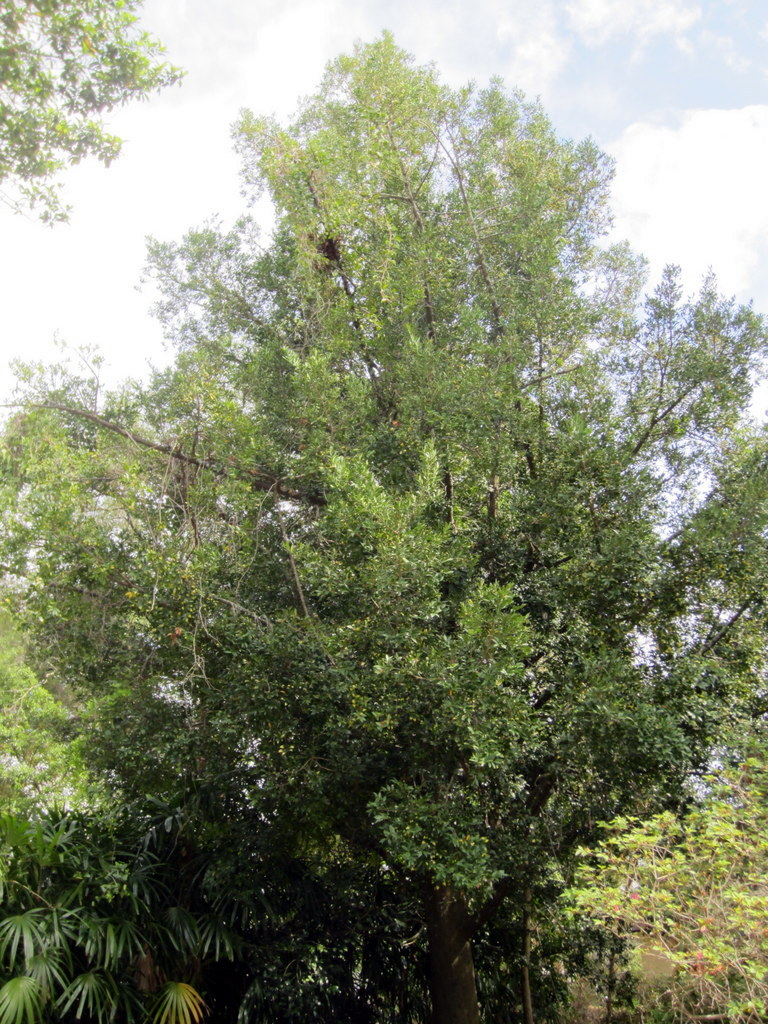
Laurel Oak Quercus laurifolia (Florida native) :


Ligustrum (Japanese Privet) Ligustrum japonicum and cvs. (Florida-friendly) :


Lily of the Nile (African lily) Agapanthus africanus (Florida-friendly):
               

Live Oak Quercus virginiana (Florida native) :


Ming Fern Asparagus macowanii :


Muhly Grass Muhlenbergia capillaris (Florida native) (produces pink wispy plumage in the fall):


Nagi Podocarpus Podocarpus nagi :


Nandina (heavenly bamboo) Nandina domestica (some varieties can be invasive) :


Norfolk Island Pine Araucaria heterophylla :


Perennial Peanut Arachis glabrata (Florida-friendly) (this groundcover is just getting started; produces small yellow flowers) :


Philodendron Philodendron cvs. (Florida-friendly) :


Pink Perfection Camellia Camellia japonica 'Pink Perfection' (Florida-friendly) :    
Pink Perfection Camellia in bloom this past February

Plumbago Plumbago auriculata cvs. (Florida-friendly) :


Purple Queen Setcreasea pallida (note: easily confused with invasive oyster plant):


Purslane Portulaca oleracea and cvs. :


River Birch Betula nigra (Florida native) :
   

Saw Palmetto Serenoa repens (Florida native) :
     

Senegal Date Palm Phoenix reclinata :


Snake Plant (Mother-In-Law's Tongue) Sansevieria trifasciata :


Stonecrop Sedum rupestre ‘Florida Friendly Gold’ :


Sunshine Mimosa (Sensitive Plant, Powderpuff) Mimosa strigillosa (Florida native) (no blooms shown but produces pink "powderpuff" blooms frequently):


Sweet Virburnum Viburnum odoratissimum :


Swiss Cheese Plant Monstera deliciosa:
  

Tabebuia Tabebuia sp. :


Tiger Eye Black-eyed Susan Rudbeckia hirta ‘Tiger Eye’ (special cultivar of Florida native) :


Weeping Yaupon Holly Ilex vomitoria 'Pendula' (Florida-native) (produces red berries) :


Weeping Yew (Weeping Podocarpus) Podocarpus gracilior (Florida-friendly) :


Wildflowers  (various genera, species) (some Florida-friendly/ some Florida native - this year we used the "Save the Bees" seed mix purchased at Palmer's; we're expecting peak bloom in a couple of months) :


Sunday, March 10, 2013

The Roof


Photo of Pine Green's Original Multicolored Roof
(note this was before the kitchen and master bedroom were added to the house)
  Since I first laid eyes on Pine Green I knew its roof was going to be a challenge... indeed it was. The asbestos roof that I inherited when I bought Pine Green, although it had for the most part protected the house for decades, was beyond its useful life:

Broken asbestos shingles
Close up of the asbestos shingles
In addition to the asbestos, small portions of the roof had some newer (albeit still too old) asphalt shingles mixed in:
Asphalt and asbestos shingles mixed
In fact, the worst leak we found in the house over the past year was at the very location where these newer asphalt shingles met up with the asbestos shingles. This may have been a contributing factor to the extensive rot we found behind the master bedroom shower early last year.

 We struggled for months to find an appropriate roofing material and to line up a roofer to do the job. Along the way, we discovered many things we hadn't realized before. For example, I thought the colorized photo presented at the top of this post was a matter of dramatic license more than reality. Surely the whimsical reds, greens, and other colors weren't what the original roof actually looked like... After all, the asbestos shingle roof was the original roof, right? And it didn't appear to vary much in color. Well it turns out the asbestos roof was not the original roof. One of the roofers bidding on the job early on discovered another roof still lay beneath the asbestos shingles. Around the same time, while I was finishing up re-insulating the attic (which is a whole other story), I discovered this:

Portion of the original roof preserved in the attic
The kitchen and master bedroom are not original to the house, although they were added just a few years later with the guidance of Sam Stoltz and the same tradesmen who constructed the original home. One slightly quirky yet telling result of this is that a portion of the original roof is preserved inside the attic in the vicinity of the master bedroom. It's a difficult area to access, which is why I had not seen it before. So I was a bit astonished when I found this, as I realized that the colorized picture was not such a case of dramatic license after all... indeed the original roof had green, red, even purplish hues. I'm still not sure how it was done - we suspect Stoltz somehow stained the shingles, perhaps similar to the way he stained the siding. It most certainly at the time resulted in even more of that "Hansel and Gretel" feel for which the house is known.

In an attempt to find a replacement roof that suited the character of the home, we explored the gamut of nearly all available styles and materials. We considered asphalt, various metals, tile, composite materials, real cedar shake... even synthetic thatch! At one point we had settled - for sure we thought - on a product called Ludoshake, a lightweight clay tile intended to mimic the look of cedar shake. We had intended to use a combination of two colors that would mimic both the shake look of the asbestos shingle, as well as the multicolor combination of the original asphalt shingle roof.

We even had the roof evaluated to determine what structural upgrades would be needed to support it. I knew it would be very expensive to do this type of roof, but it turned out it was simply ridiculously expensive... so much so that even considering the super long life of clay tiles, the lifecycle cost of installing such a product compared to others became debatable. Removing the asbestos, and all its associated special handling due to environmental regulations, was going to be expensive enough. Perhaps one day Pine Green will receive such a luxury treatment... but for now we think we found "the one"...

It was likely a bit of serendipity that the Ludoshake goose chase bought us time to discover a relatively new shingle we had not seen before. As can be seen in the before and afters below, it has multiple colors that give a nod to the original roof, and, while it is an architectural shingle, it is not as showy or an overkill attempt at forced perspective as we found many other architectural shingles to be.

So in late February, after much toil, the real work began::

Workers demolishing the multiple roof layers down to the roof deck
A glimpse of what was: a bit of the original roof still intact after years of lying beneath asbestos shingles before it was stripped away
Pine Green down to the bare roof deck - overall the wood was in great condition with relatively little replacement needed
 As part of the project, we decided to go ahead and demolish the now defunct rear brick chimney. We suspected it was leading to drainage and structural issues, and the apparent damage once it was removed was a little more than we expected:
Rear chimney gone -  significant wood rot is going to mean a  bit of a tricky restoration is needed to  make what's left blend with the rest of the house
The garage and playhouse (now art studio) were also included in the project:

Garage receiving the new shingles
We've still got some additional woodwork and other details to cover, and the new shiny copper drip edge is going to take some getting used to (although it will patina soon enough), but for now, we're quite happy with the transformation:

Before
After

Sunroom corner during roof removal
After


Before

After

Before

After
While the roof has been a major focus, we have also been launching into more landscape improvements in preparation for the 2013 Private Gardens of Lake Eola Heights Historic District on April 21, which will feature Pine Green along with many other homes in the neighborhood. In fact, if you look carefully, you can see one of our newest additions to the right side of the house (in front of the kitchen window) is a wonderful weeping yaupon holly tree. We're honored to have Pine Green as part of the event, and we're certainly glad we got the roof done in time!


Sunday, December 23, 2012

Merry Christmas from Pine Green!

It's beginning to look a lot like Christmas...
Well, it has been several months since my last post, and believe or not it's been a year since we moved to Pine Green. We'll take some time in the coming weeks to update the blog with our latest progress, but for now, we hope everyone has a Merry Christmas and Happy New Year!

Saturday, July 21, 2012

Summer & Sunflowers


Living room arrangement of sunflowers grown at Pine Green
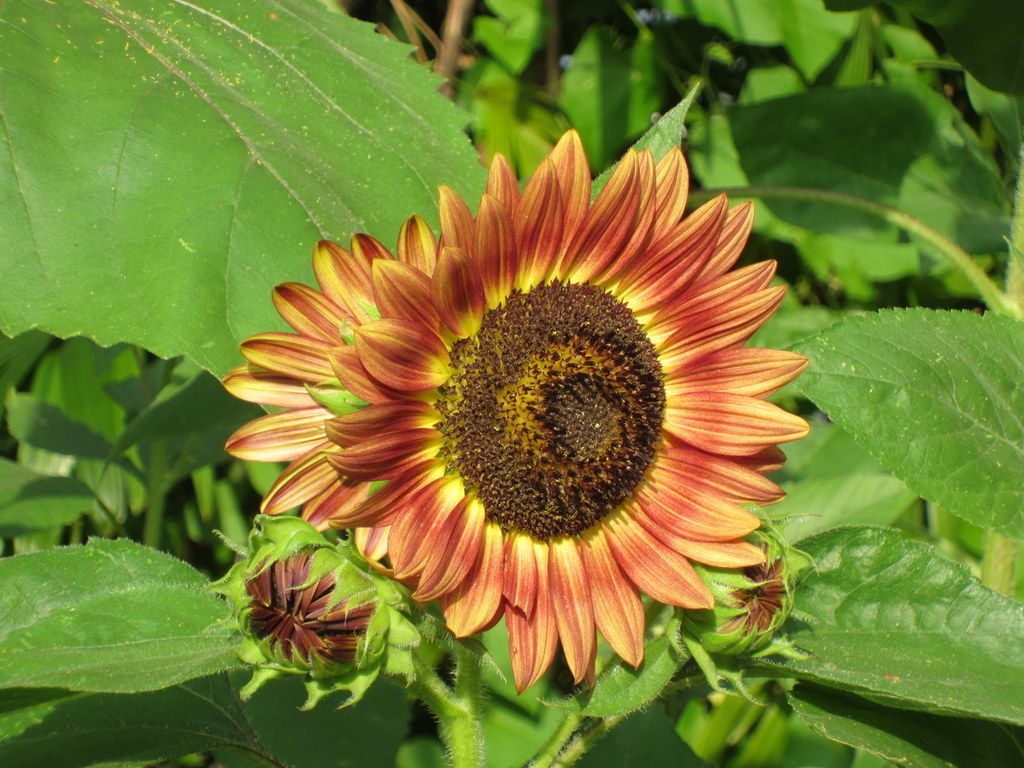
Summer has managed to slow us down a bit, especially as far as yardwork, although we're still managing to put in several hours of work per week maintaining the yard. A couple of months ago I decided to create an experimental "garden" space (as opposed to landscape) on the east side of the property in front of the parking area. We'll likely rotate through various plants throughout the year, but I decided to start by planting a variety of sunflower seeds:

Young sunflowers (foreground) - May 21, 2012
They grew quickly and densely. I decided not to thin them, and although not as big, sturdy, and bold as I might have hoped, they put on a pretty good show:
Sunflowers near their peak in July 2012


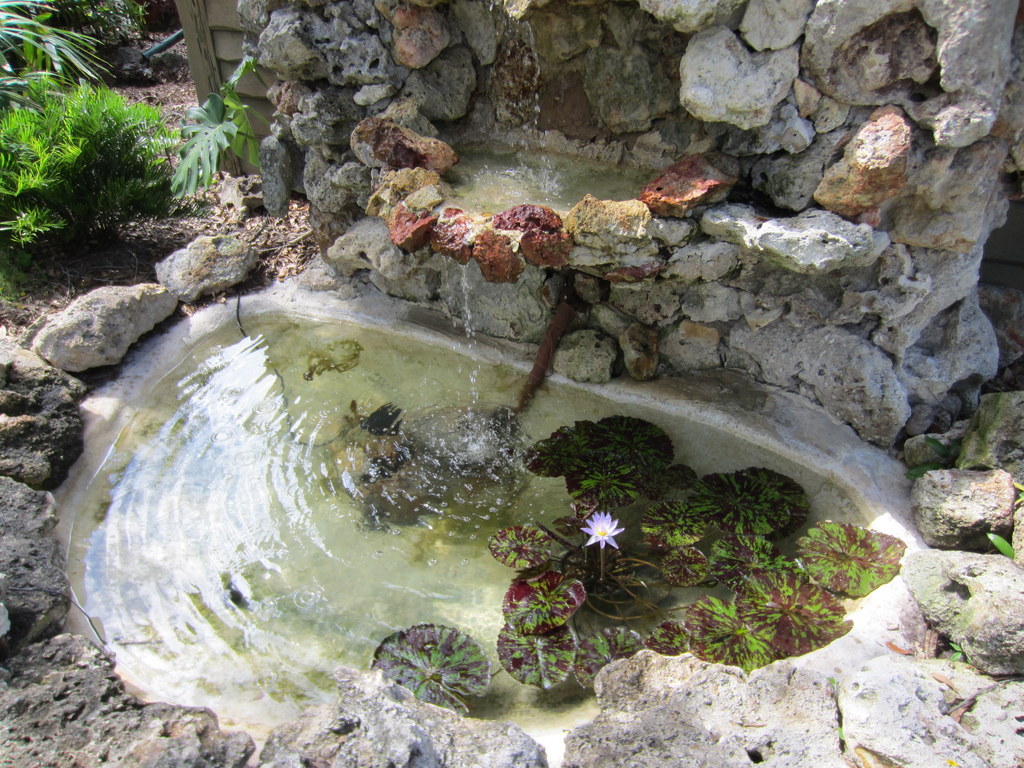
We've also been trying to figure out the best low maintenance solution for the chimney's fountain and pond. The water tends to get green with algae quickly; algaecide is limited in effectiveness, and chlorine is too harsh for the pump system we have. So last week, inspired by one of our neighbors, as well as my experiences in lake management, we decided to experiment in converting it to a "living" system by cleaning the fountain thoroughly then adding a water lily and a submersed plant called coontail:

Lily on the right; coontail more difficult to see on the left (underwater)
Lily's flower

Fountain with plantings
The hope is the lily will provide shade, reducing sunlight available for algae to photosynthesize, and the coontail will compete for nutrients in the water as it grows, keeping algae in check. We shall see how well it works in practice.

Other than that, one rainy weekend we repainted the living room and dining room - a subtle change but a nice improvement. We've also added some new lighting and window treatments. I've spent a lot of time outside over the past several weeks working on creating rain gardens to reduce the exposure of the garage and house to runoff. The rain gardens are mainly planted with muhly grass, since it is both drought and flood tolerant. Hopefully it will have some pink plumes in the fall so I'm waiting until then to post some photos. Other newer plantings include cassia, plumbago, lantana, pumpkins, and beautyberry - the latter being a successful transplant from some I gathered in the wild at my parents' farm.

Reid has also diligently been working on converting the playhouse to a personal art studio - he'll be doing a "guest blog" entry on that and more in the future.

And I'm slowly working on re-insulating the attic and starting to gather my thoughts on perhaps getting the house and accessory buildings re-roofed this fall or winter.

Summer has finally brought about some good rains, a richness to the landscape, and a bit of an urban oasis for birds and plenty of other wildlife. As for me, I'm spending more time inside, looking forward to some cooler temperatures in a few months, and crossing my fingers that my pumpkins actually manage to fruit in the fall.